The Studio
One human CEO.
Ten AI departments.
An AI studio organised like a software company. Each department has its own skills, its own work queue, and only the context it actually needs.
Built like a company
One person decides. One desk keeps the day in order. Ten departments of specialists do the work.
1
The CEO
One human. Answers the questions, reviews every mock, approves every gate.
1
Chief of Staff
Routes every new issue to the right department, keeps the day in order, and sets up each new product's repository and folder.
10
Department heads
Ideation to Marketing. Each head plans the work and asks the CEO.
46
Specialists
Claude sub-agents, each on the model that fits its job.
69
Skills
All the studio's written playbooks: how each head and specialist does the work.
11
Outside tools
Godot, ComfyUI, Fastlane, Firebase and more: what a department would otherwise buy in.
Why not just agentic coding?
One coding agent breaks on a real product. Here's where.
Point a single agent at a whole app or game and the same ten problems show up. The studio is built to do the inverse of each one.
- Context rotOne conversation fills up, drifts, and starts solving problems that no longer exist.Each department holds only its own brief
- Work lives in chatClose the window and the plan, the decisions and the reasons are gone.Work lives in GitHub issues
- One agent wears every hatIt designs, codes, tests and markets with the same instructions.Departments own their work; heads coordinate
- Long skillsGiant rule files load every time and crowd out the actual work.Short skills; detail loads only when needed
- Inherited transcriptsThe next task starts with the last task's entire conversation.Small written handoffs
- Builds first, asks laterYou find out what it misunderstood after it has written it.Questions or a prototype, then a yes
- Generic tasteIt only knows what the model knows, so the output looks like everyone else's.The best public skills and tools, hired in
- Rules driftAn instruction in a prompt gets forgotten halfway through the job.Rules enforced by hooks and checks
- You are the schedulerEvery morning starts from scratch, steering turn by turn.Chief of staff, continue
- One model for everythingToo costly for routine work, not careful enough for the hard calls.The right model for each role
01 · Context
Agentic codingUnrelated work piles up in one context window. The model weighs all of it, so the output turns erratic: tasks get mixed together and it fixes problems that no longer exist.
The hard part was never the code. It was the context.
The studio keeps context outside the model. GitHub issues hold the work, written handoffs carry the decisions, and each department loads only its own brief. Every session starts clean.
One giant assistant
Unrelated context in, erratic output out.
Context window94% full
Ten departments
Each one starts from its own brief and holds only what its job needs.
Ten windows, each mostly emptyDesign is working on the chest tile
- IssuesThe work and every decision live on GitHub, not in a chat that disappears.
- HandoffsA short written brief passes to the next department instead of a whole transcript.
- DepartmentsEach one sees only its own queue, skills and brief, so nothing unrelated gets in.
02 · Issues, not chat
Agentic codingThe work lives in a chat. Close it and the plan, the decisions and the reasons go with it.
Every piece of work is a GitHub issue.
Labels say who owns it, who needs to know and what is waiting on the CEO. Departments ask each other through sub-issues. Every decision is a comment, so the issue is the memory.
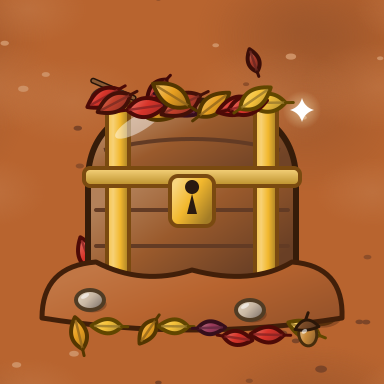
Add a buried treasure chest tile to World 1 #142
- CS
Chief of Staff routed it to Design and told Marketing
- DH
Design head asked Marketing in a sub-issue
Will the chest change the store screenshots? #143
- CEO
CEO answered 2 questions and approved the prototype
- DH
Design head wrote the handoff to Engineering
- EH
Engineering head linked a pull request · merged, checks passed
- dept:
- One owner. The label decides which department's queue it joins.
- fyi:
- Who needs to know. They hear about it without loading anything.
- prio:
- What gets picked first when the CEO chooses who works today.
- ceo:review
- Waiting on the CEO. Nothing moves until it's answered.
- sub-issue
- One department asking another, tracked like any other work.
03 · Departments and heads
Agentic codingOne agent wears every hat: it designs, codes, tests and markets with the same instructions.
Each department owns its work. Its head runs the specialists.
A label routes the issue to one department. Its head plans the work, asks the CEO and hands each part to a specialist. Only that department's skills load, never all 69.
Loaded for this issueTold about it, loads nothingStays on the shelf
5of 69 loaded
04 · Short skills
Agentic codingGiant prompts and rule files load every time, whether the task needs them or not.
Every skill is short. The detail waits until a step needs it.
A skill is a one-page procedure. Its depth lives in reference files that load only when that step runs. A check runs after every skill edit, so none of them can quietly grow.
design-head / SKILL.md · 62 lines

1. Read the issue and the last handoff.
2. Ask the CEO, one card at a time.
3. Pick a direction    → references/directions.md
4. Mock first, screenshots per state.
5. Write the handoff to the issue.
- accessibility.md
- anti-patterns.md
- components-android.md
- components-ios.md
- directions.md loaded for step 3
- platforms.md
- screen-states.md
- tokens.md
- quick-mock.md
- lines in a skill, on average
- 49
- lines of reference, read only on demand
- 6,158
- lines before the budget check fails a skill
- 500
05 · Small handoffs
Agentic codingThe next task starts by inheriting the last task's entire conversation.
The next department gets a brief, not a transcript.
Every handoff is written back to the GitHub issue. The next department starts clean from that brief, instead of inheriting a massive conversation.
Design head commented · Handoff to Engineering
Done
- Chest tile painted and approved by the CEO
Decided
- Chests sit on gold-vein ground only, one per map
- Placeholder art stays out of the build
Next, for Engineering
- Place one chest on a gold-vein tile when a map loads
- Digging the tile opens it and pays out
Read first
docs/spec/chest.mdart/painted/tiles/chest.png
Left behindThree mock rounds, two rejected directions and every message in between.
06 · Approve before build
Agentic codingIt builds first and asks later, so you find out what it misunderstood after it has written it.
Nothing gets built until the CEO says yes.
Before any work starts, the department either asks its questions or shows a prototype. Either way, the work waits on one person.
Design · question 2 of 3
Where can a chest be buried?
- 1Gold-vein ground only (recommended)
- 2Any open ground
- 3Only on the last row of the map
or
The ceo:review label holds the issue until the CEO answers.
07 · Borrowed expertise
Agentic codingIt only knows what the model knows, so the result looks like every other AI app.
The best public skills and tools, hired in like specialists.
Where someone has already written the best guide to a craft, the studio uses it instead of writing its own. Each one is loaded by the department that needs it, and nowhere else.
- taste-skillDesign · art direction for screens and sites
- frontend-designDesign · Anthropic's guide to distinctive interfaces
- UI/UX Pro MaxDesign · patterns, palettes and type pairings
- Slop.mdDesign · the list of tells that make work look AI-made
- Material 3Design and Engineering · Android, done the platform's way
- Liquid GlassDesign and Engineering · iPhone, done the platform's way
- GodotGame mechanics · the game engine
- ComfyUIDesign · painted art from approved placeholders
- FastlanePublishing · builds and store uploads
- FirebaseEngineering and Publishing · services and hosting
08 · Rules that can't be forgotten
Agentic codingAn instruction in the prompt gets forgotten halfway through, and nothing notices.
The rules that matter are enforced, not requested.
Hooks run on every action, whether the agent remembers the rule or not. Checks have to pass before the CEO is ever asked.
- Session startAfter a clear, the last handoff loads by itself, so work resumes without rereading everything.
- Design gateA restyle can't reach a phone or a pull request until its visual audit and an independent review pass.
- Skill budgetEvery skill edit is measured. Too long, and the change is refused.
- Quality loopBuild, tests, lint and review all pass before anyone asks the CEO.
- Protected branchesNothing is pushed straight to the main or development branch. Every change is a pull request the CEO merges.
- Build ledgerAfter every turn, time, tokens and skills used are written down.
09 · Chief of staff, continue
Agentic codingYou are the scheduler. Every morning starts from scratch, steering turn by turn.
The next morning is one command.
The CEO doesn't brief ten departments. The Chief of Staff reads the latest handoffs, checks GitHub, asks anything it needs, and keeps the work moving. Every session ends clean.
Start with the Chief of Staff
It routes new issues, then asks the CEO everything waiting on them, one multiple-choice question at a time.
The CEO picks the departments
One question: which departments work this session. The busiest unblocked queue is recommended, or run every department with work, in order.
Each head works in turn
The chosen heads run one after another on their own queues. Between heads, the Chief of Staff writes down where things stand.
Clear and start again
With the handoff saved, the CEO clears the conversation and starts fresh through the Chief of Staff. Every session begins clean, and nothing is lost.
> /aiceo:chief-of-staff
Routed 3 new issues: #142 Design, #145 Engineering, #147 Marketing
2 questions answered. Nothing else waits on you.

Which departments should work this session?
❯ 1. Design, 4 ready (recommended)
  2. Engineering, 3 ready
  3. Marketing, 1 ready
  4. All with work, in that order

Design head: 3 issues done, 1 mock waiting for your review
Handoff written to .factory/handoff.md

Safe to /clear now. Then run /aiceo:chief-of-staff continue.

> /clear
> /aiceo:chief-of-staff continue
Read the handoff. Next up: Engineering, 3 ready.
Not agentic programming. A company.
- Agentic programming
- A studio built like a company
- The unit of work is a prompt to a coding agent.
- The unit of work is an issue, owned by a department.
- A developer steers the agent, turn by turn.
- The CEO makes the decisions. The Chief of Staff and the heads run the work.
- It writes code.
- It builds the whole product: idea, design, art, balance, marketing and release.
- It knows what the model knows, plus the prompt.
- Every role has written skills, the way a company writes down how each department works.
- Its memory is one conversation that fills up and drifts.
- Its memory is handoffs and GitHub, so every session starts clean.
10 · The right model for each role
Agentic codingOne model for everything: too costly for routine work, not careful enough for the hard calls.
Every role is staffed with the model it needs.
Like hiring, each seat in the company is matched to the work. The expensive judgement is saved for where it pays.
- OpusHeads and hard callsPlanning, architecture, design direction, reviews.
- FableRare spikesEngine spikes, balance campaigns, milestone plans, escalations.
- SonnetSpecialistsBuilding, writing listings, posts and store assets.
- HaikuRoutine desksRouting, digests, lint, translations.
The outcome
From people using it
Less context. More projects at once.
“The aiceo tools and workflows are redefining AI development. By pulling everything into GitHub, it's easier and faster to plan and work on my projects, and it's made it possible to actively work on several at once without blowing up my usage limits.”
“Most AI setups drag the whole company into every task, and you pay for it in tokens. aiceo only sends the department whose job it actually is, with the few rules that matter right now. Everything lives on GitHub issues, so a session reads one issue instead of relearning the whole project.”
So far
What it has made so far.
- 69written skills
- 14plugins
- 8apps
- 3apps live on Google Play
- 2apps live on the App Store
- 4apps in store testing
- 1,648issues and pull requests since 15 Oct
- 858pull requests merged
- 531issues closed
- 1,732commits
None of this is new. People have organised teams this way for decades.
It turns out the same structure works remarkably well for AI agents too.